IMPORTANT!
This course will be replaced from September 2026, by our latest NCFE L2 Certificate in Creative Crafts: Art and Design course. New prospectus coming out soon!
The last date of enrolling onto this course is 26th June 2026, whereby learners will have until Summer 2028 to complete the course.
If you think your learner may not be able to complete the course by Summer 2028, please wait until our new NCFE L2 Certificate in Creative Crafts: Art and Design course has been launched, as this deadline is imposed by the awarding body, NCFE and cannot be extended.
Flexibility in Mind
This course has been designed as a 1 or 2 year course, although as all qualifications with Aced, this is flexible. There are no fixed deadlines or end of course exam therefore learners can work at a pace that is suitable for them.
Want to Complete the Course Sooner?
If you wish to completed at a quicker pace, this is also possible- just choose your preferred payment method and liaise with us to pay the balance at the point of requiring your certificate.
Course Overview
- Entry Requirement: No formal quals required. No minimum age requirements. Guide of 13/14yrs to start.
- Durations: Example based on completing over 2 years: We would suggest approximately 5hrs per week.
- Requirements: Computer with internet connection, phone camera or better and selection of art resources.
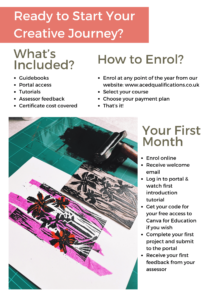
- Enrolment: Enrol anytime! There are no enrolment windows to wait for, so learners can start straight away!
- Awarding body: Accredited with NCFE.
- OFQUAL regulated: 500/8988/2
- Level: Level 2 qualification.
- Total Qualification Time (TQT) : 240 hours
- Learner evidence: Portfolio assessed (internally assessed, externally moderated).
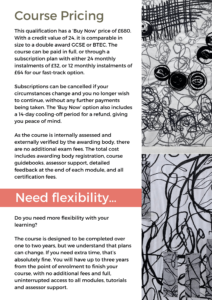
- Total cost: £680 ‘one off’ payment or subscription method of 24 monthly instalments of £30.
- Course structure: There are 10 Modules plus an additional portfolio submission at the end of the course.
- Worth: 24 Credit value / 2 GCSEs comparable to grade 4-9/A-C *.
- * However we always suggest checking with your local college if requiring in place of a GCSE.
- The pay-in-full discounted rate of £680 is available exclusively to home-educating families who are privately funding their course. Local Authority bookings, or enrolments funded through external agencies, will be charged at the standard course price of £768. This ensures the discount is passed directly to the families it was designed to support.



Who is this Qualification For?
This qualification is designed for learners who wish to develop a range of skills and techniques essential for working in the art and design sector or for learners wishing to create an art portfolio for personal benefit or to be able to continue with higher education for level 3/ A level courses.
Whether you or your learner is looking to kickstart a career in art & design or as a stepping stone to further Art & Design based qualifications, this alternative to GCSE Art may be the choice for you?
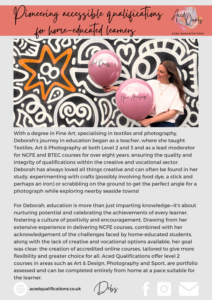
We offer complete flexibility in our approach, removing the barriers creative, home educated learners face. No exam, no controlled assessment and no stressful trips to exam centres are required, enabling learners the chance to achieve nationally accredited courses from home. Learners can work at their own pace without the added anxiety attached to fixed deadlines and timetabled exam dates.
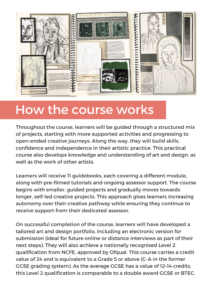
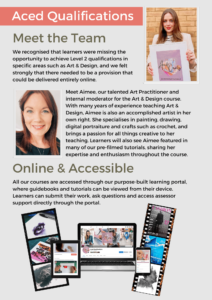
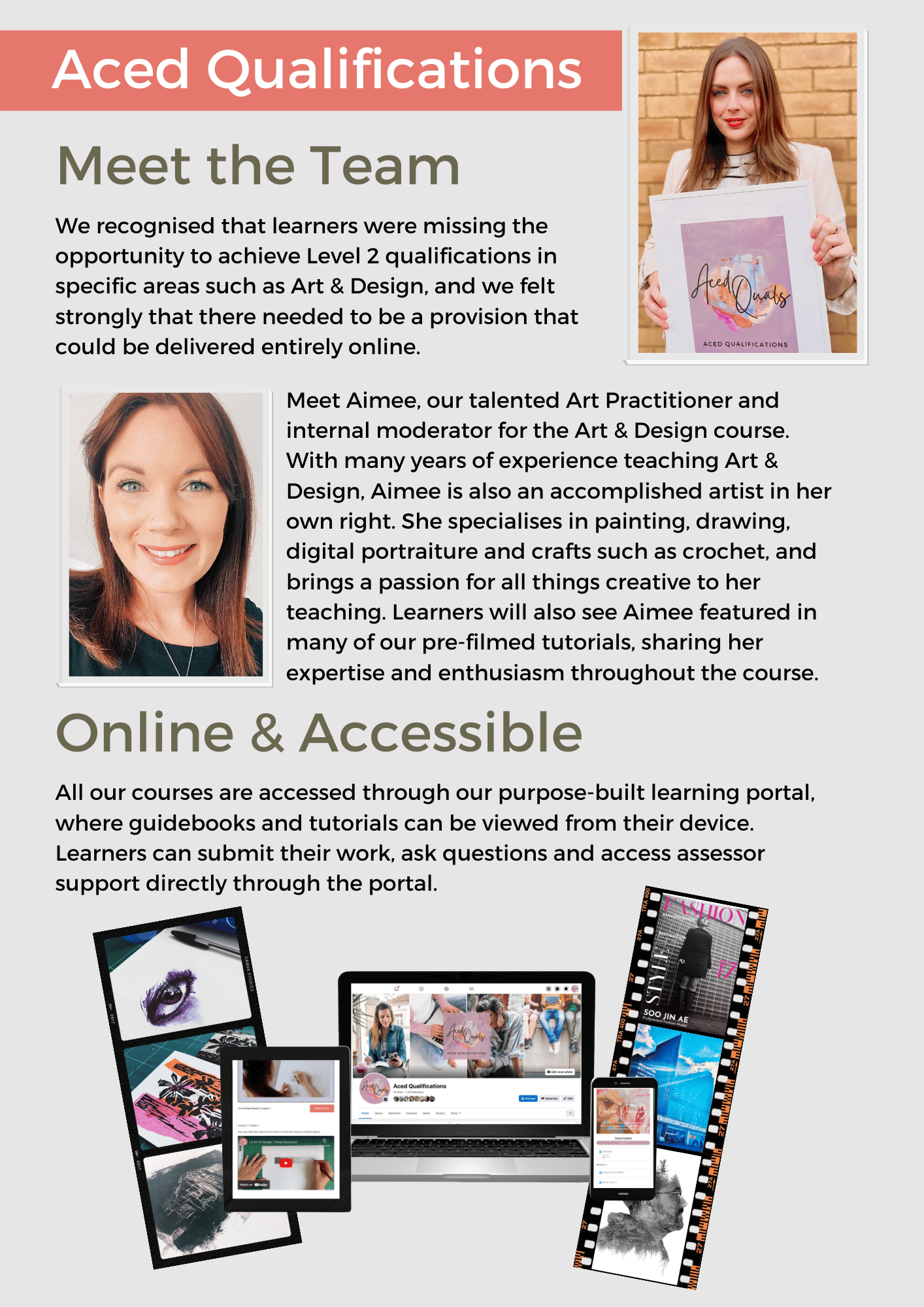
Learners will complete this fully guided qualification virtually, with the help of directed projects, assessor support and pre-filmed tutorials from our subject specialist practitioners.
Work will be assessed online, with positive and encouraging feedback periodically throughout the course. On successful completion of the 11 modules, our learners will receive their Ofqual accredited certificate, comparable to two GCSEs (comparable to grade 4-9/A-C *).
Follow the link below to see our general Aced Qualifications Facebook Group, to keep up to date with all our courses, including our Art & Design Course:
Follow the link below to see our Aced Art Facebook Group, to keep up to date with everything Art, including our Art & Design course as well as our Photography course:


What will I learn?
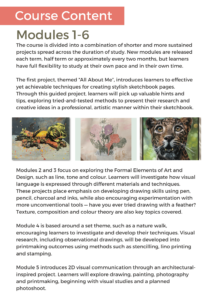
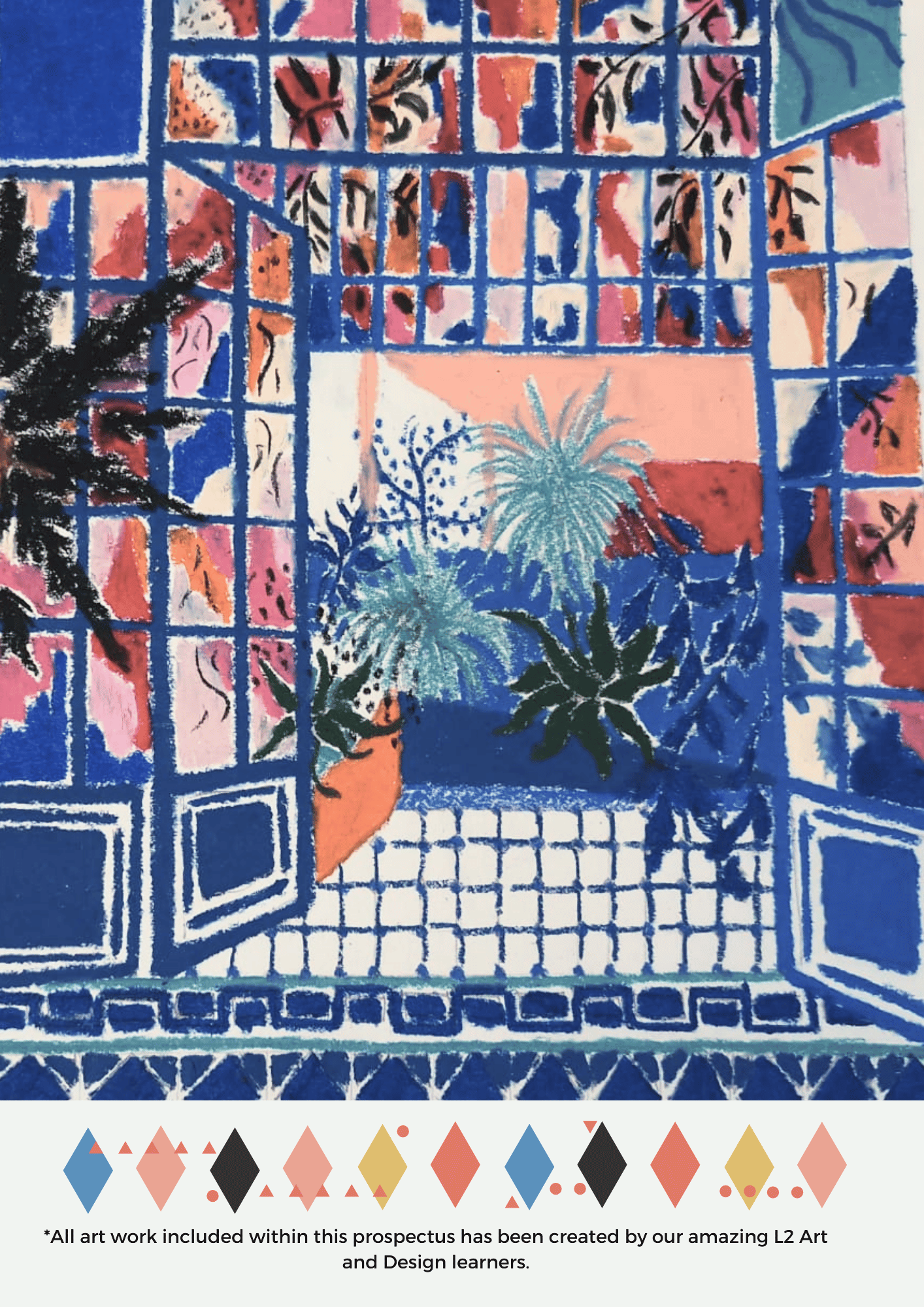
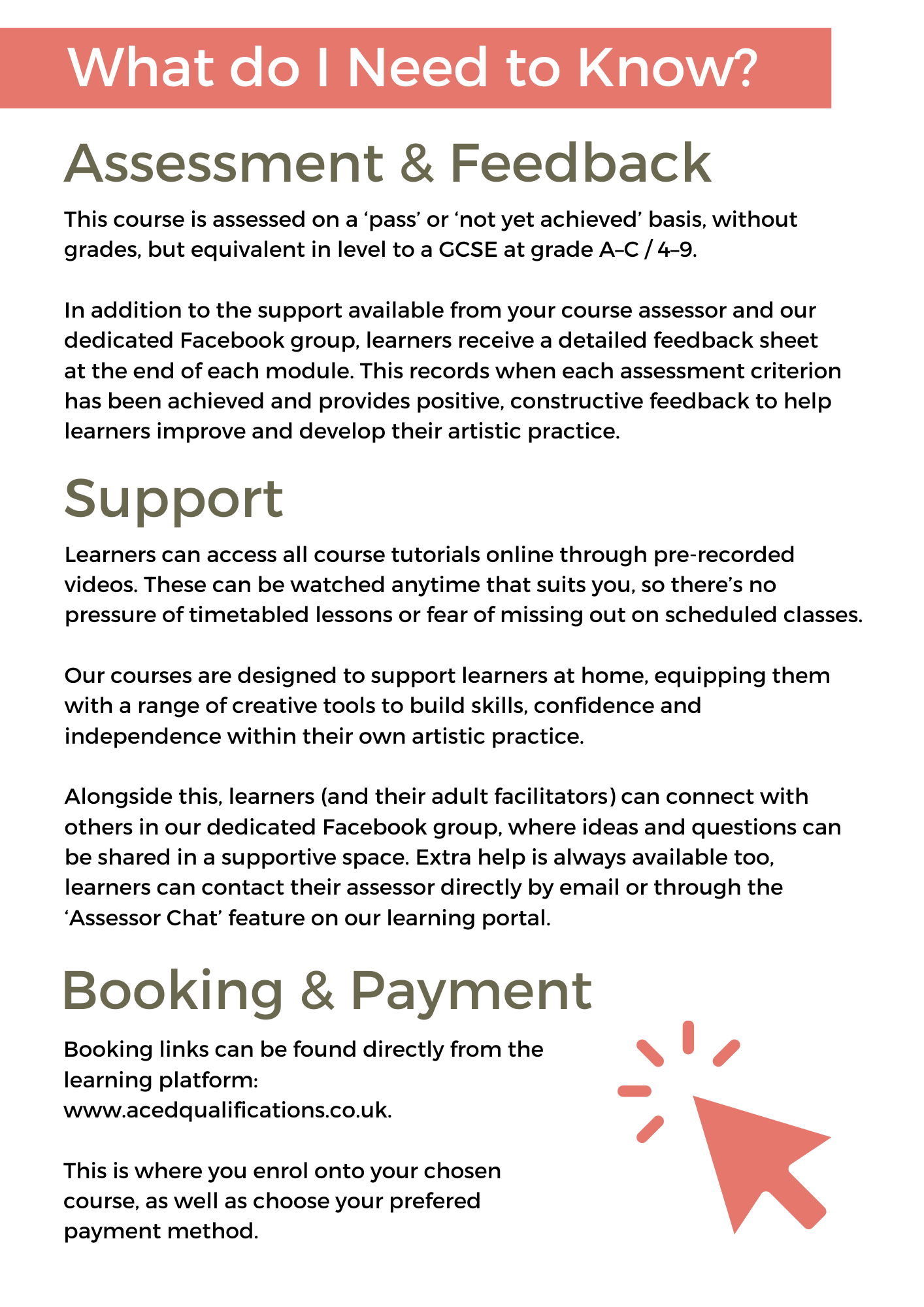
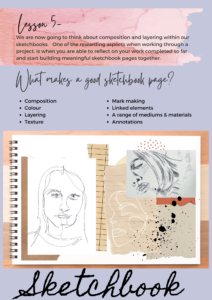
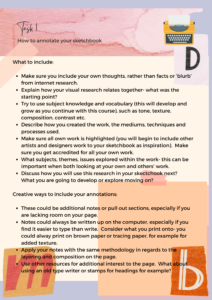
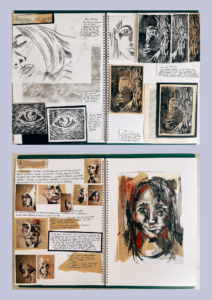
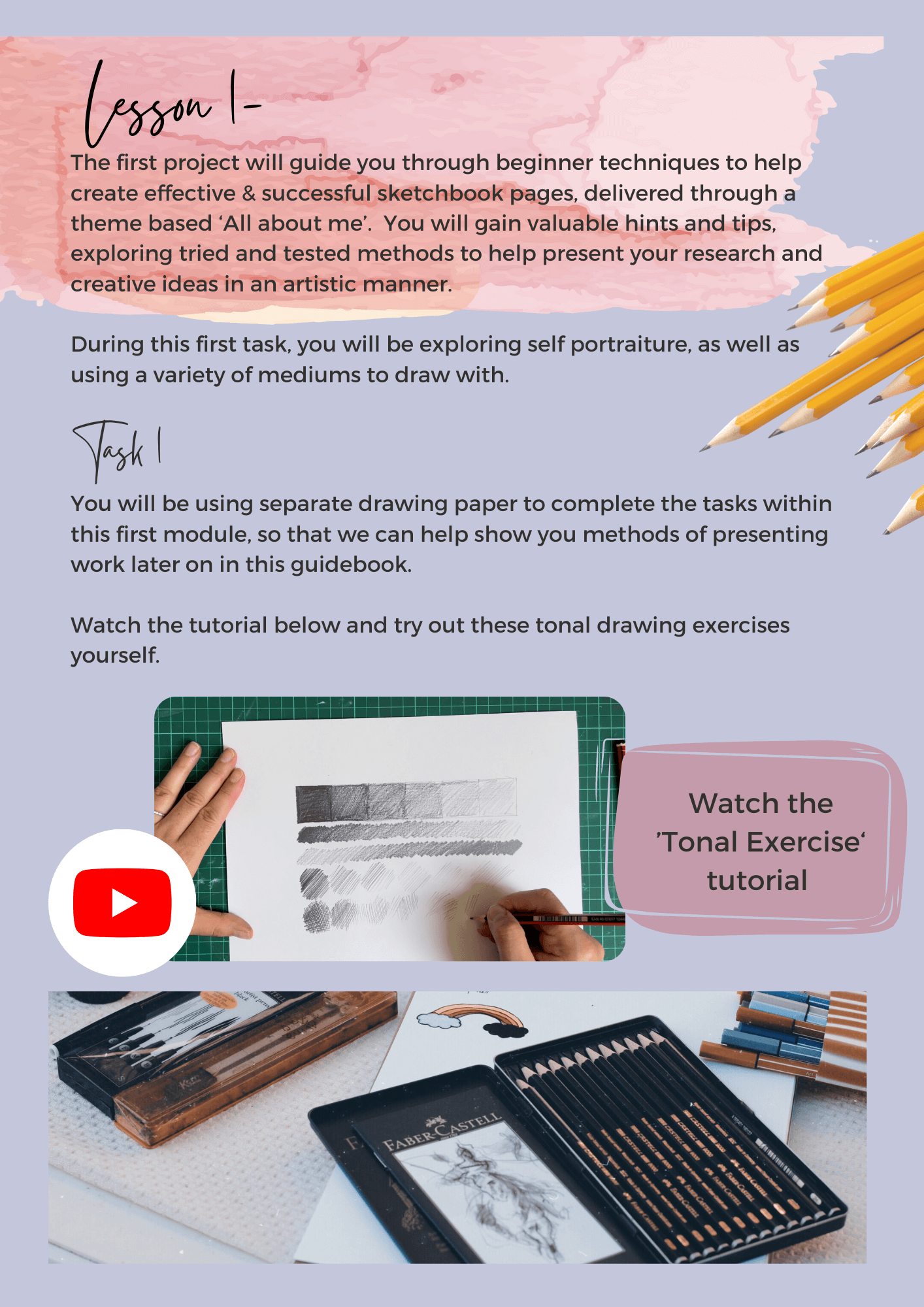
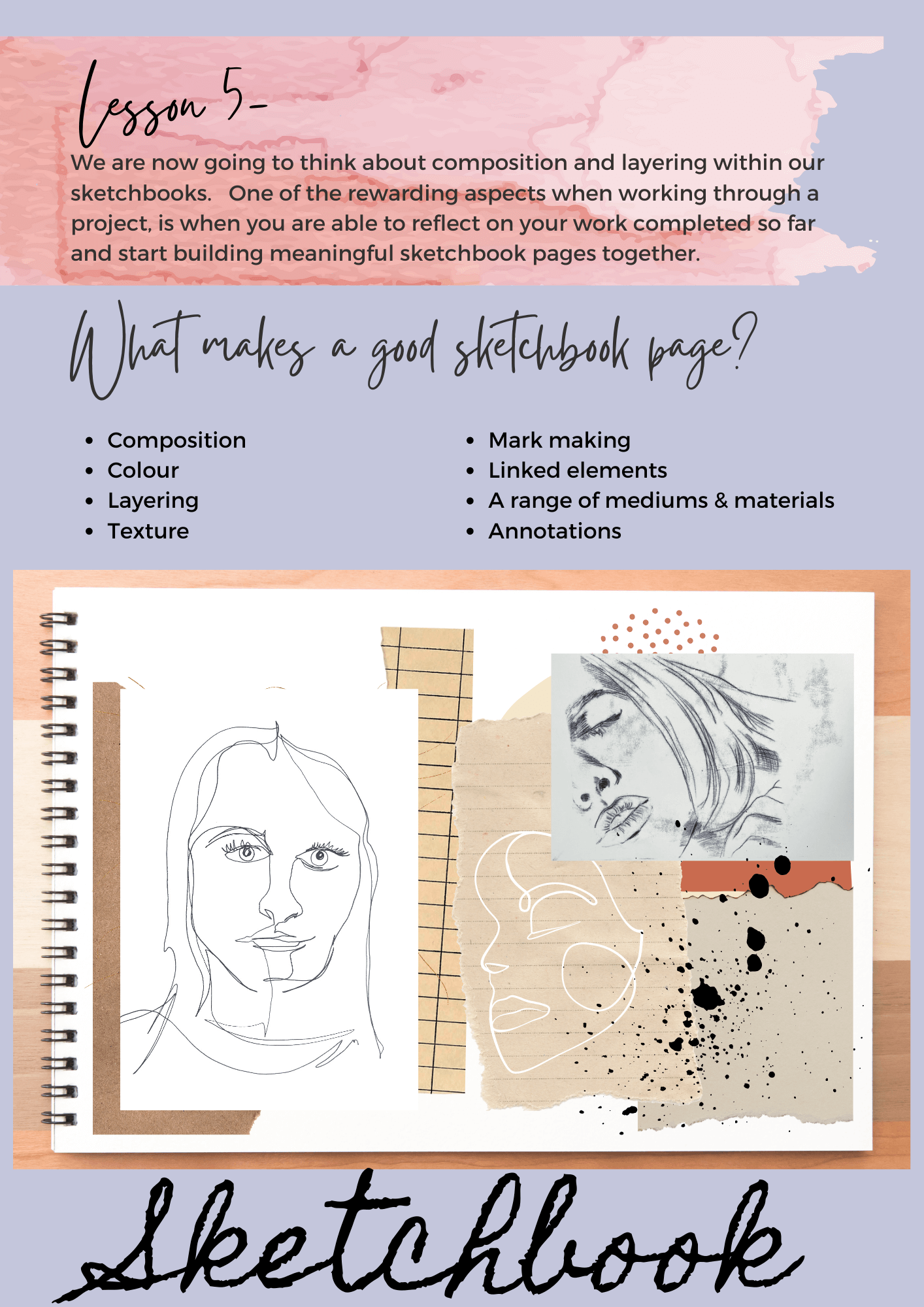
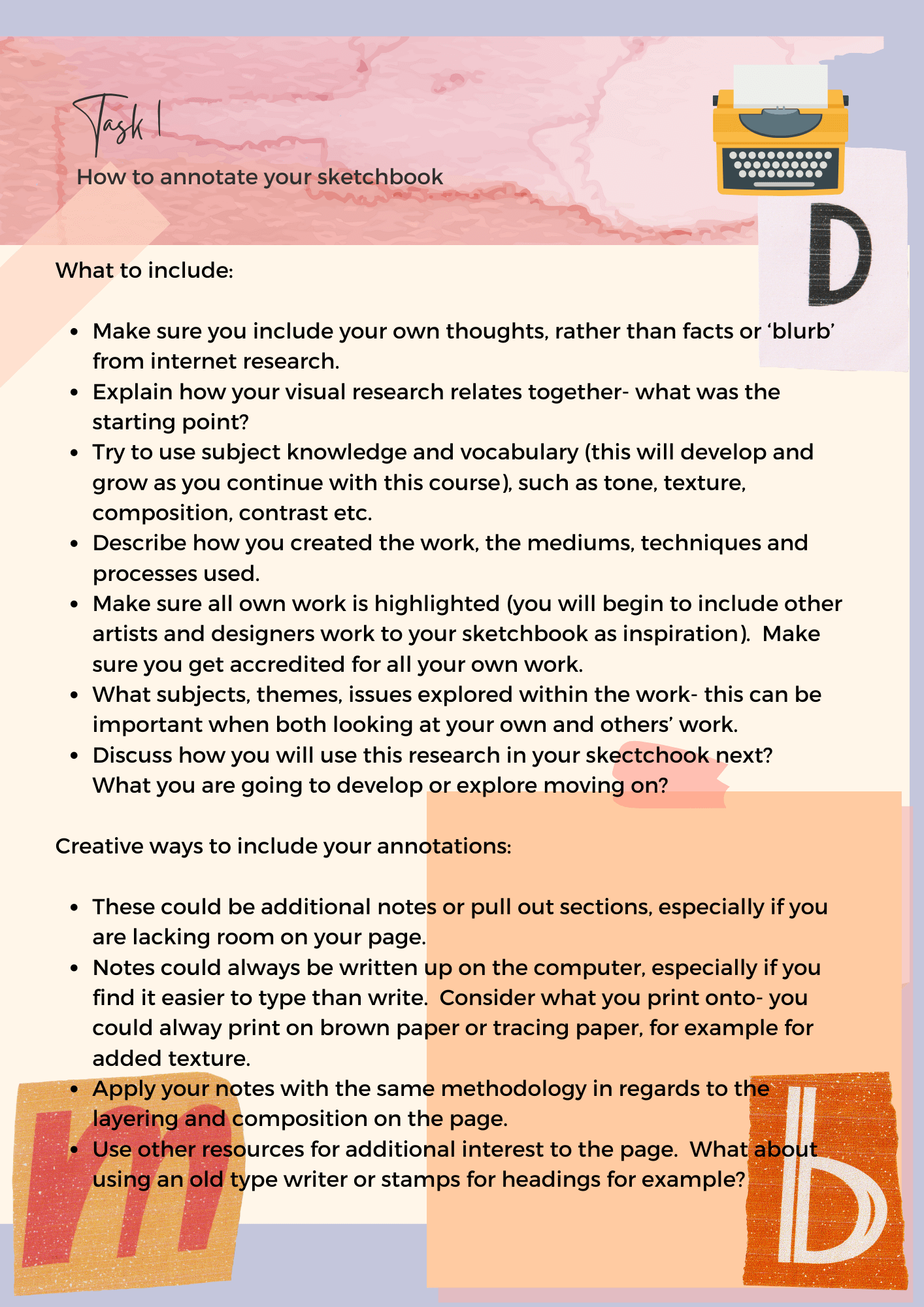
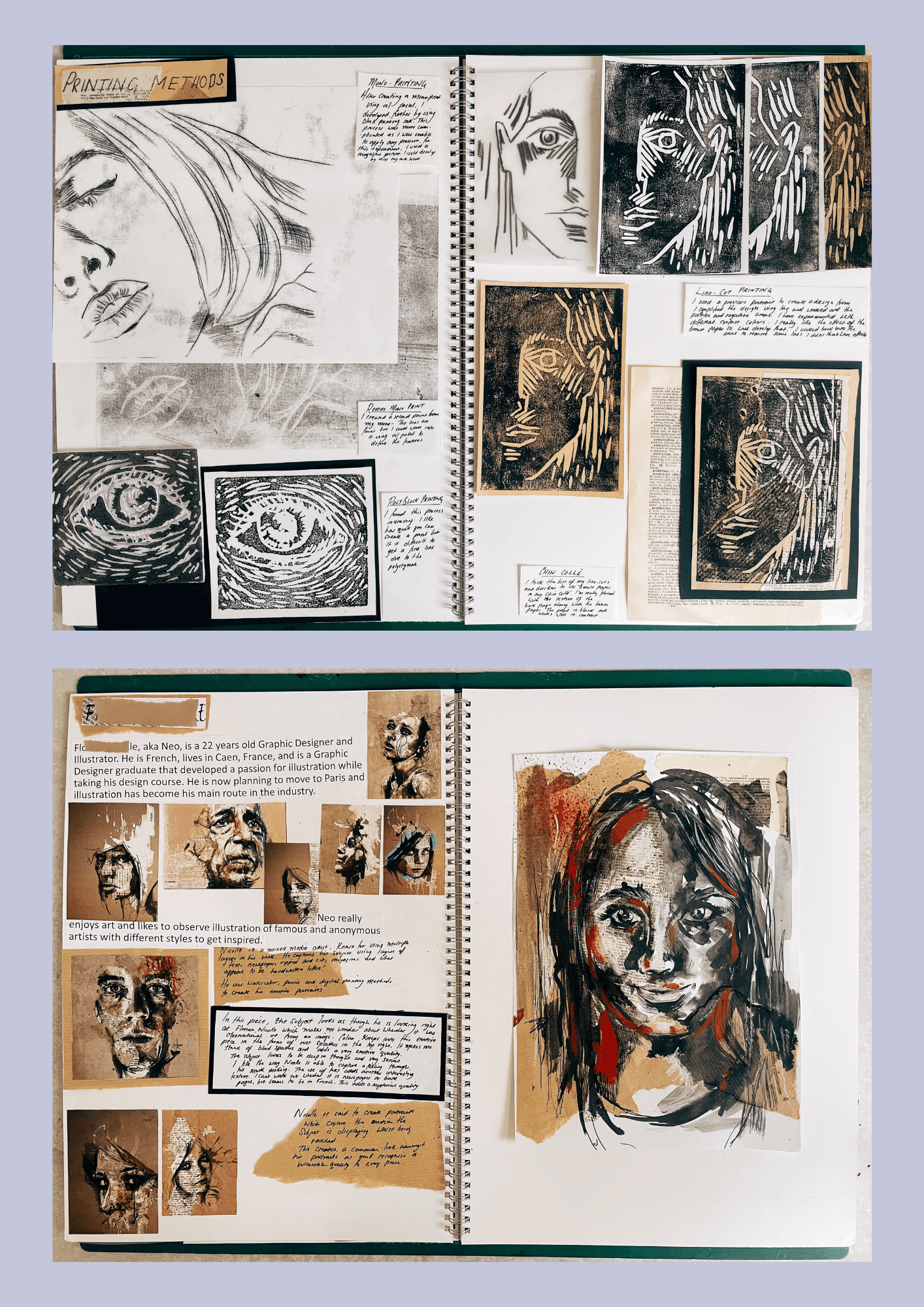
- Effective Sketchbook Techniques: Learn how to create stylish and informative sketchbook pages through a themed projects.
- Understanding Formal Elements: Explore the Formal Elements of Art & Design, such as line, tone, texture and colour, as a foundation to your Art & Design knowledge.
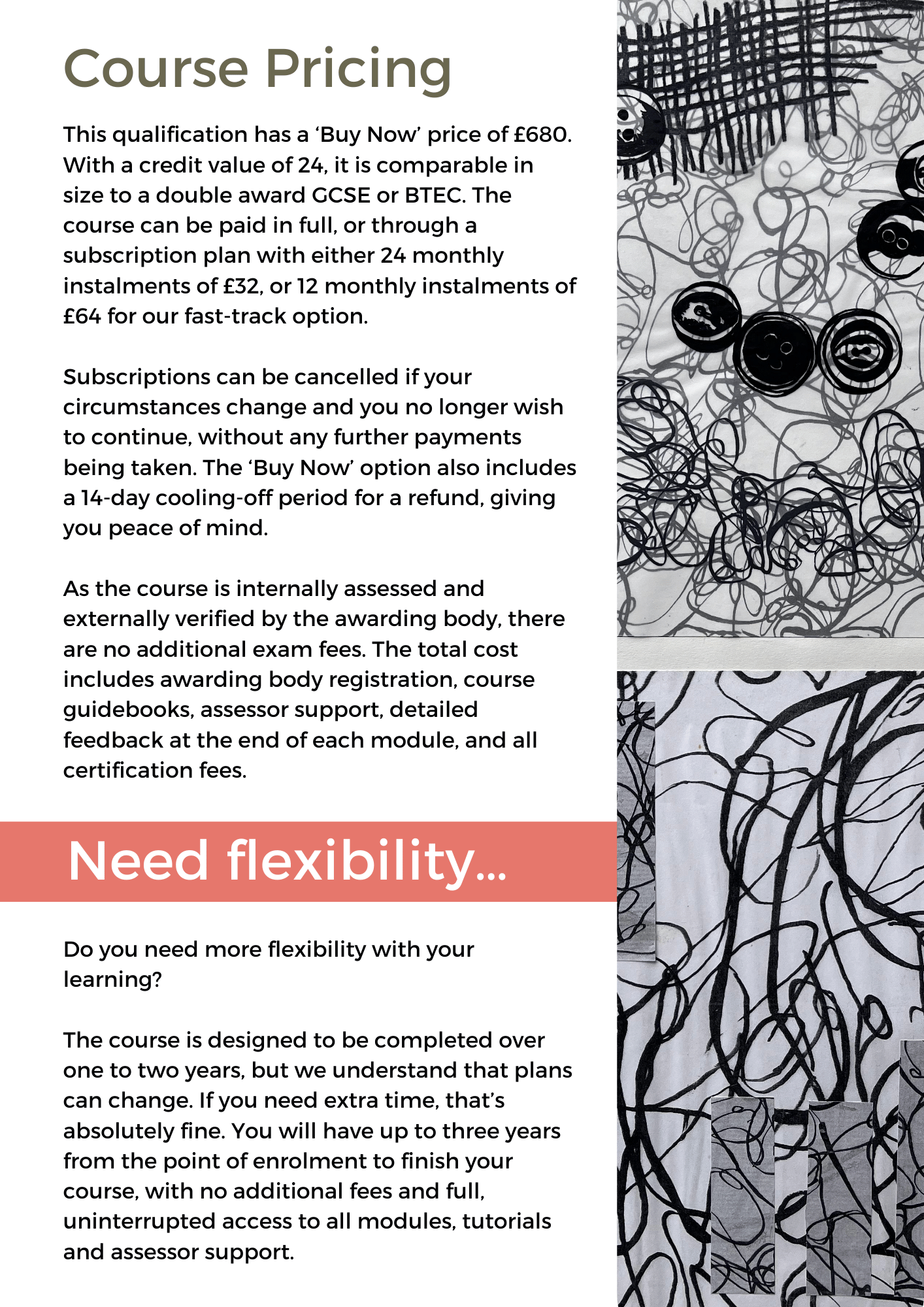
- Experimentation with Drawing: Develop drawing skills using various materials including pen, pencil, charcoal, moving to unconventional tools like feathers for unique textures, for example.
- Visual Language: Gain insights into using visual language effectively with different materials and techniques.
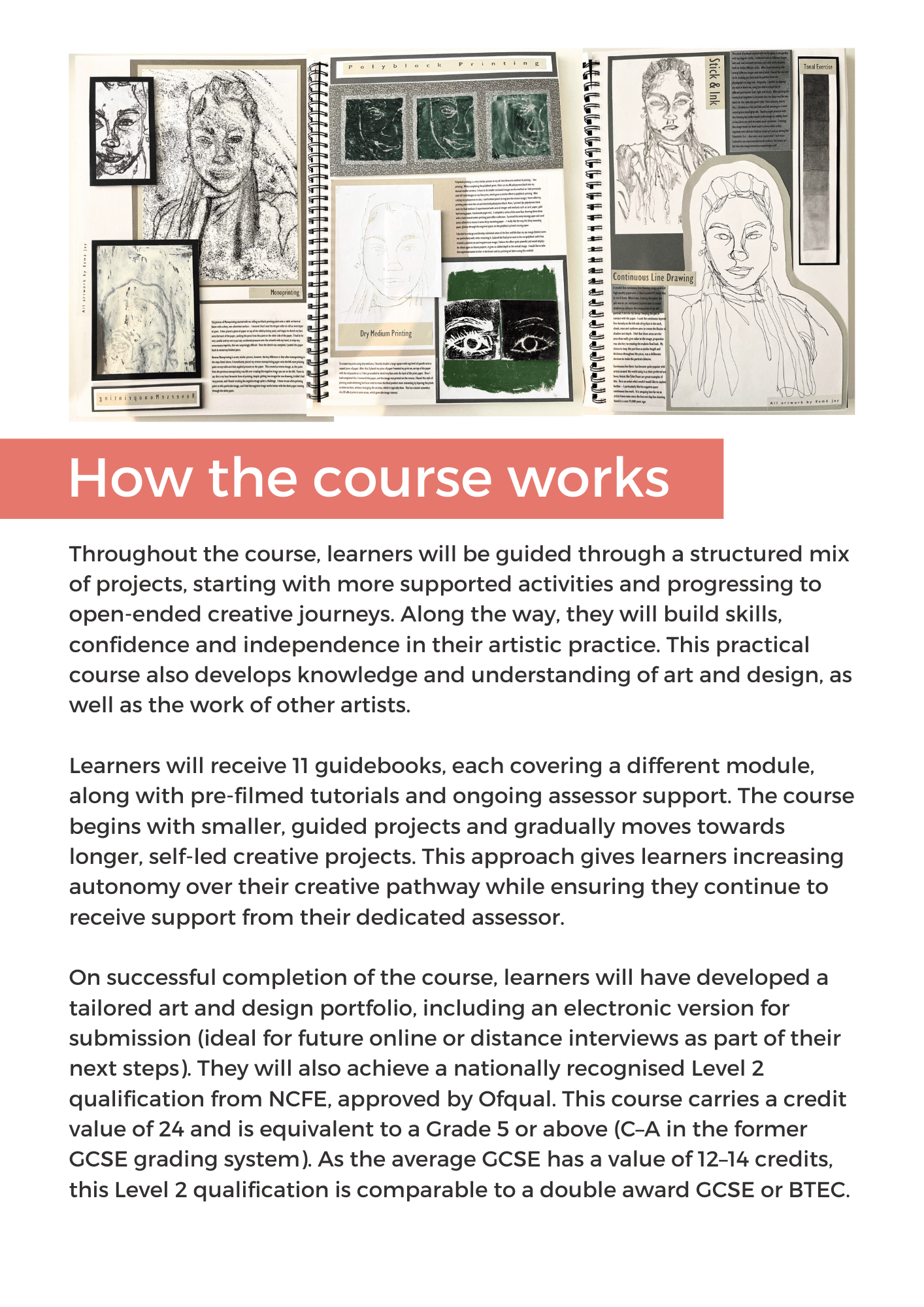
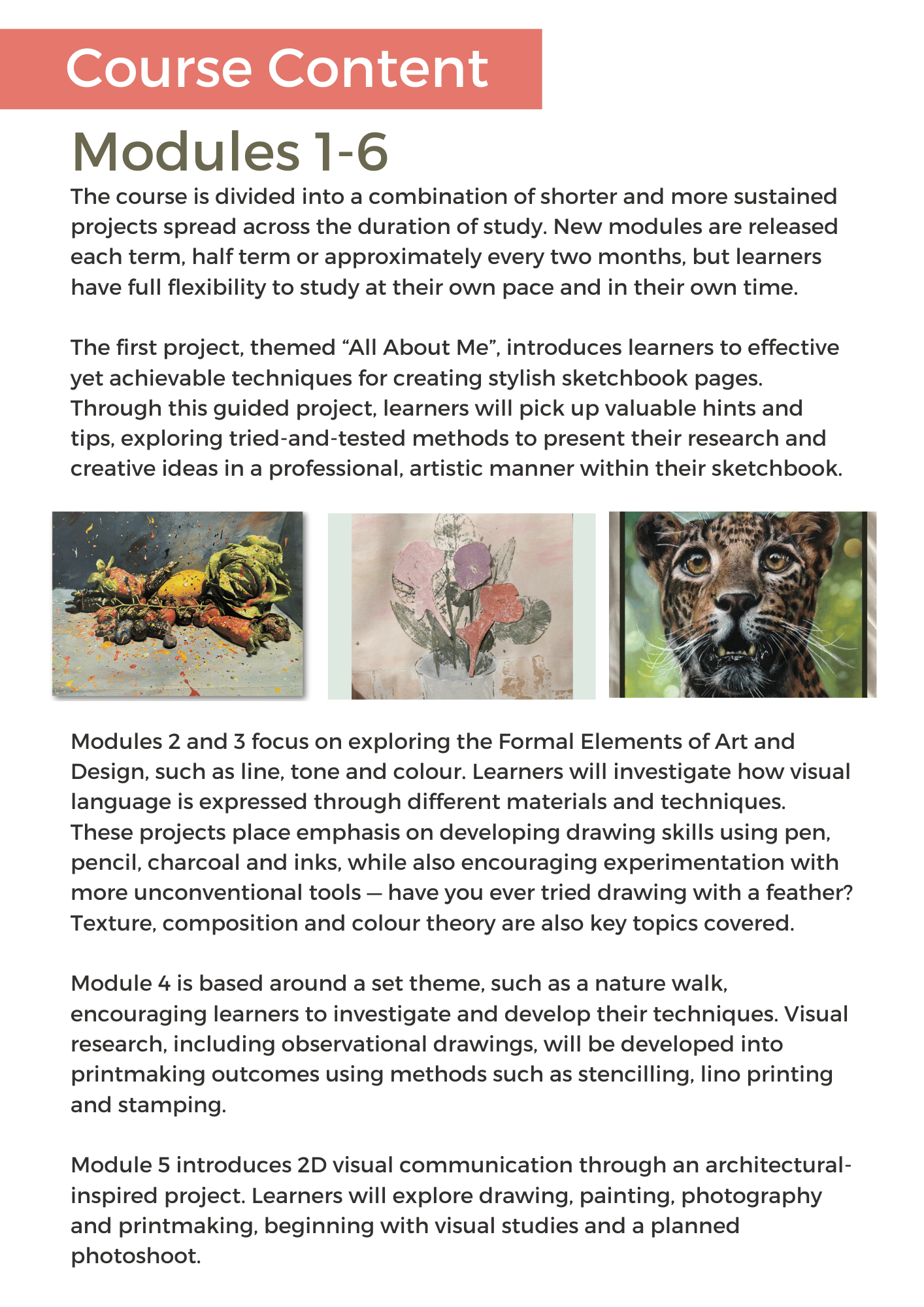
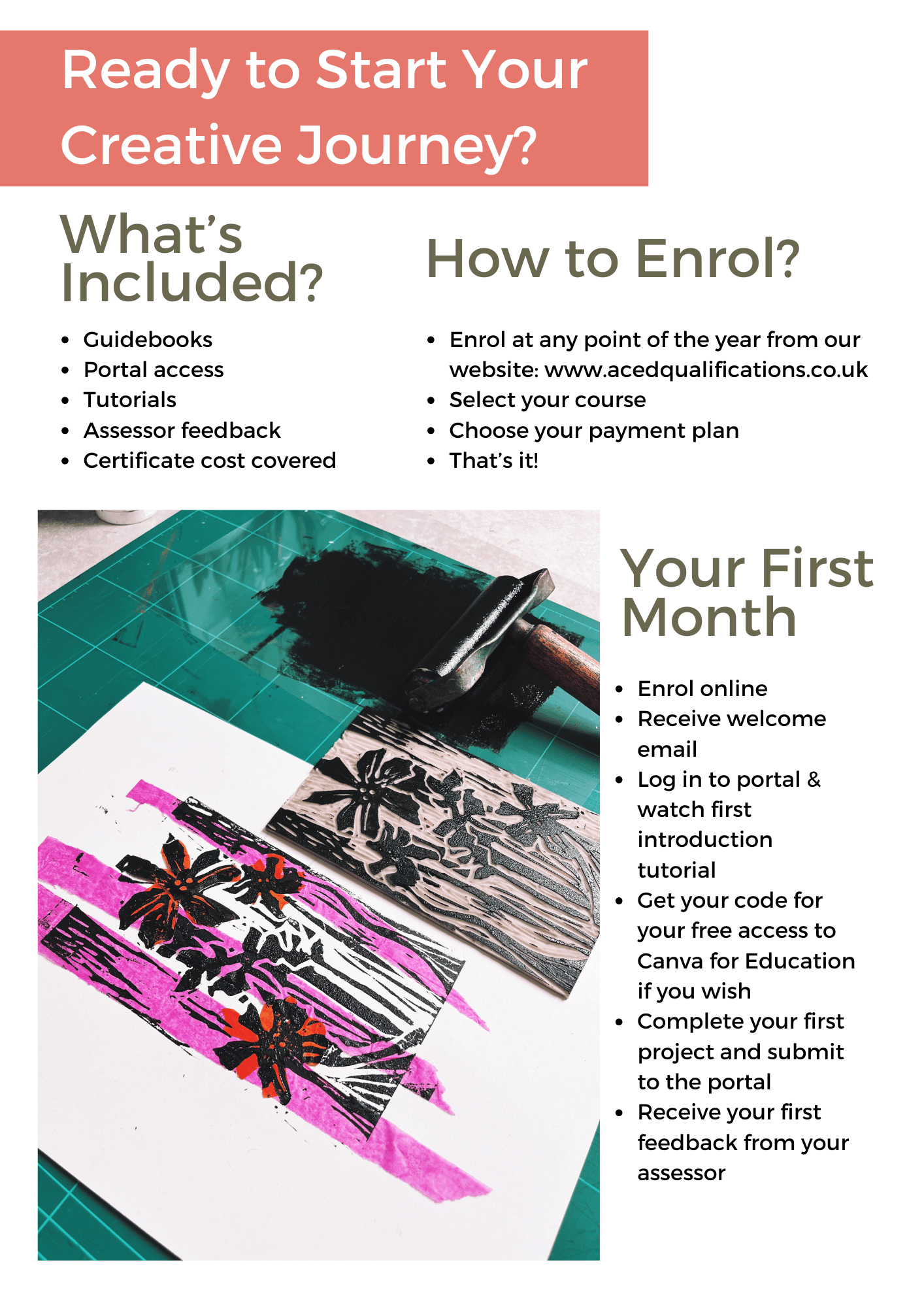
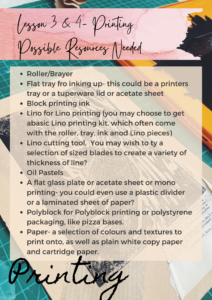
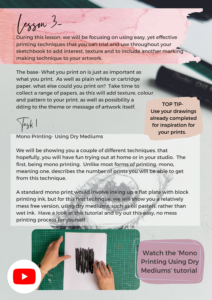
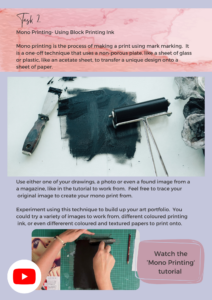
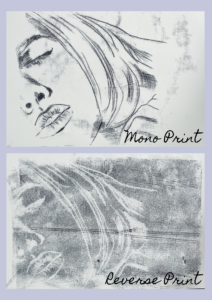
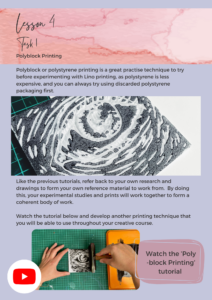
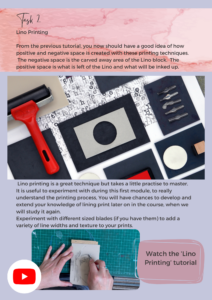
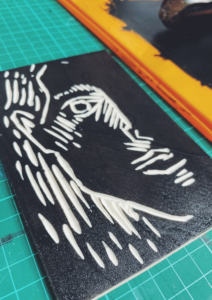
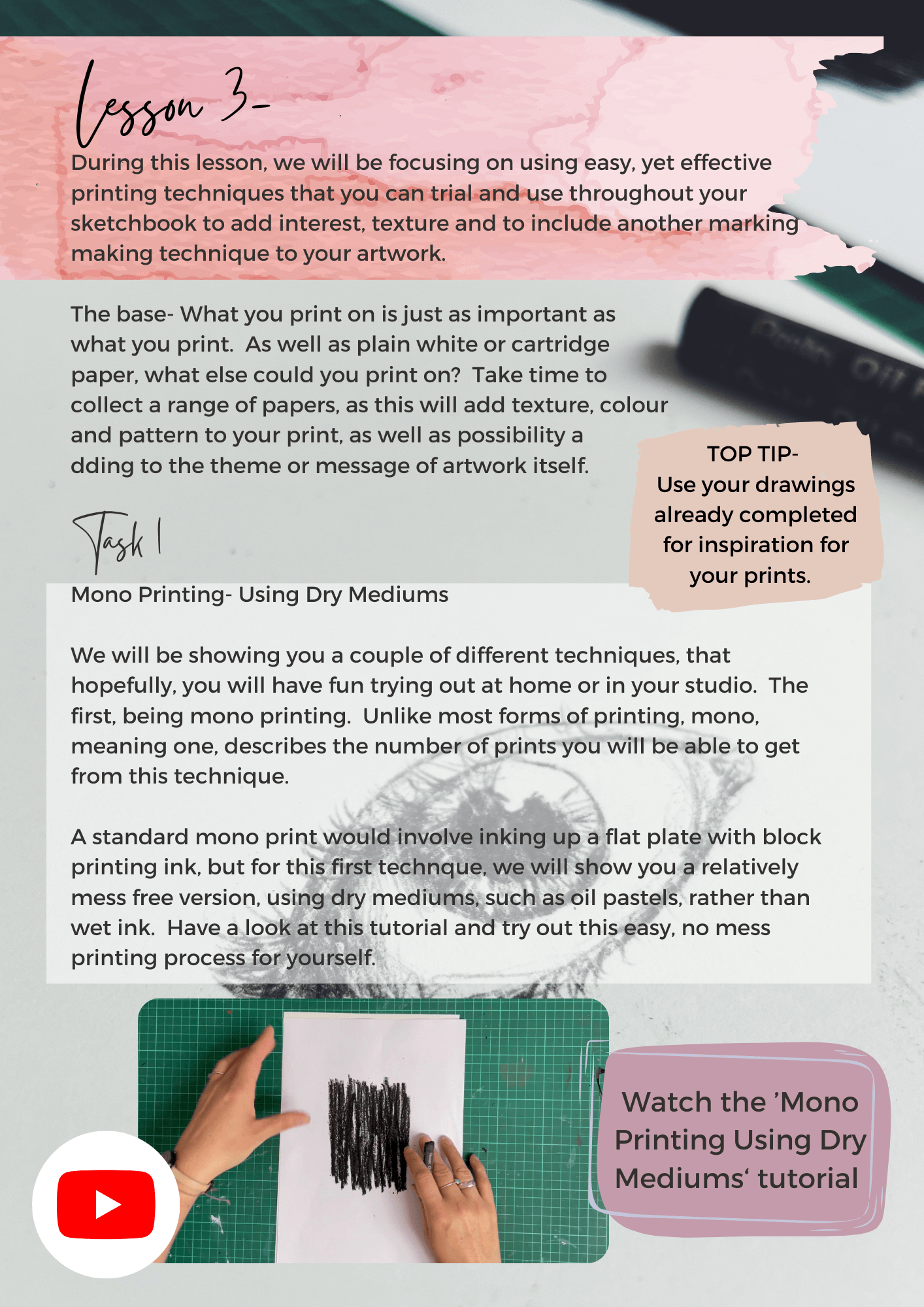
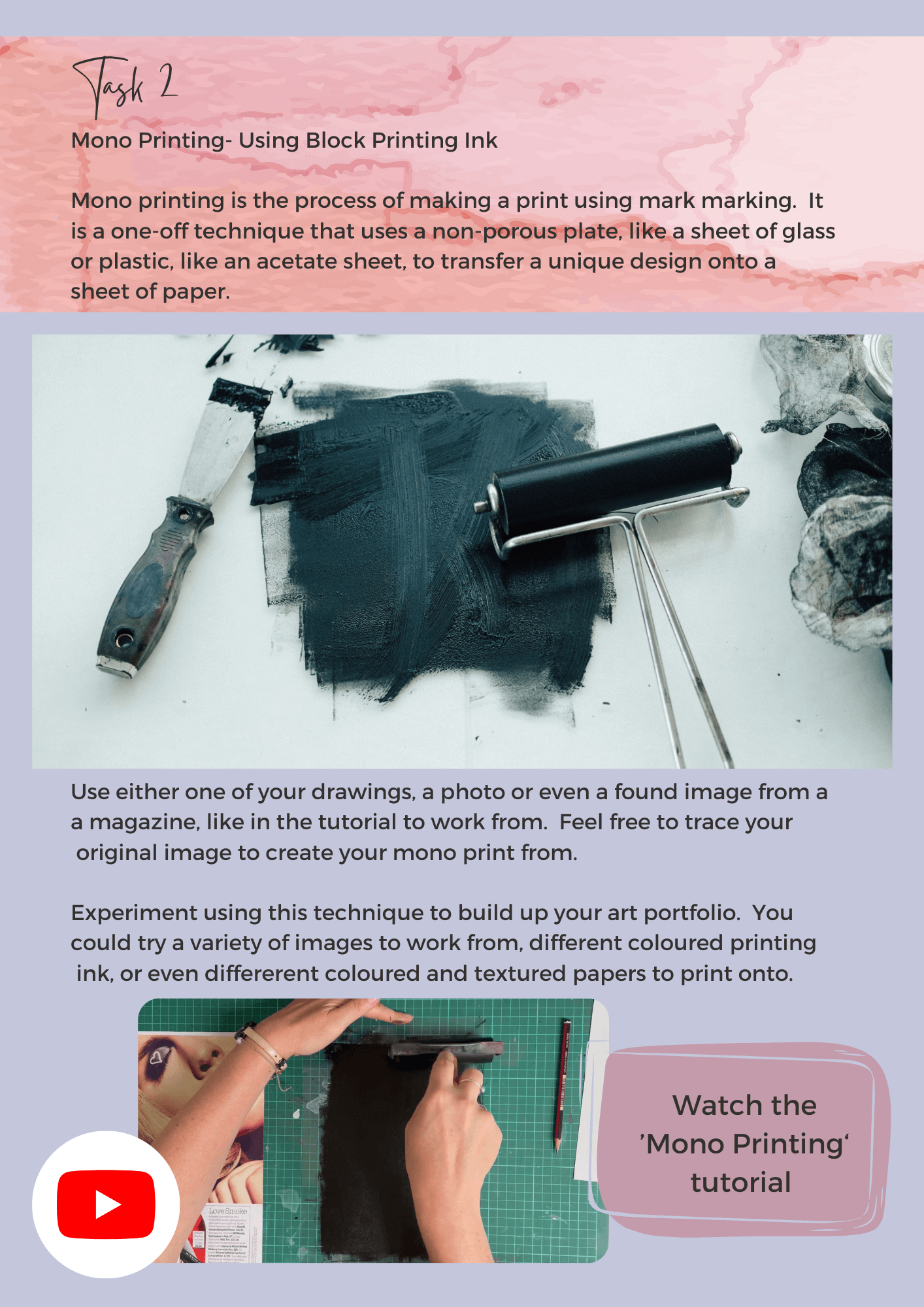
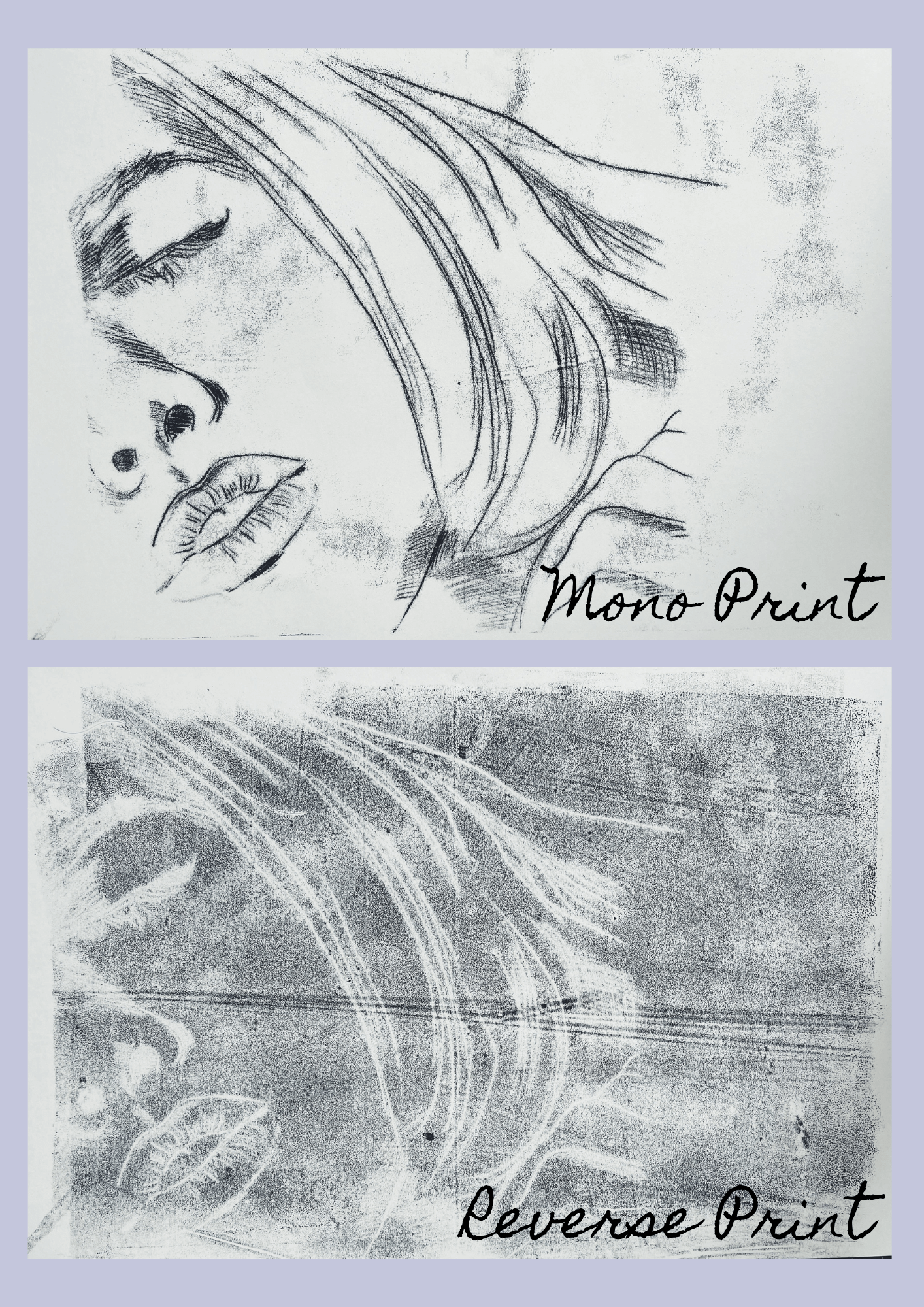
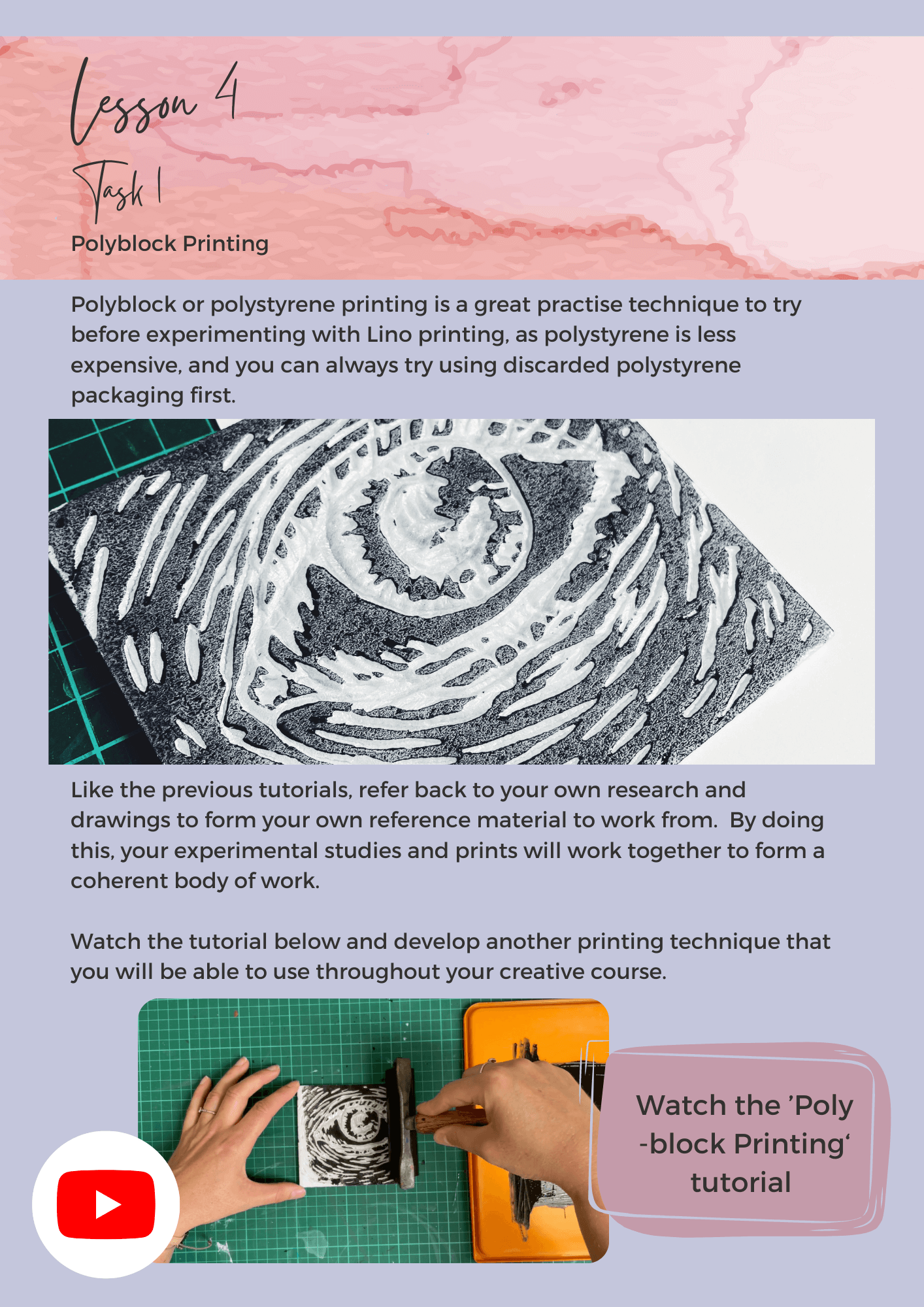
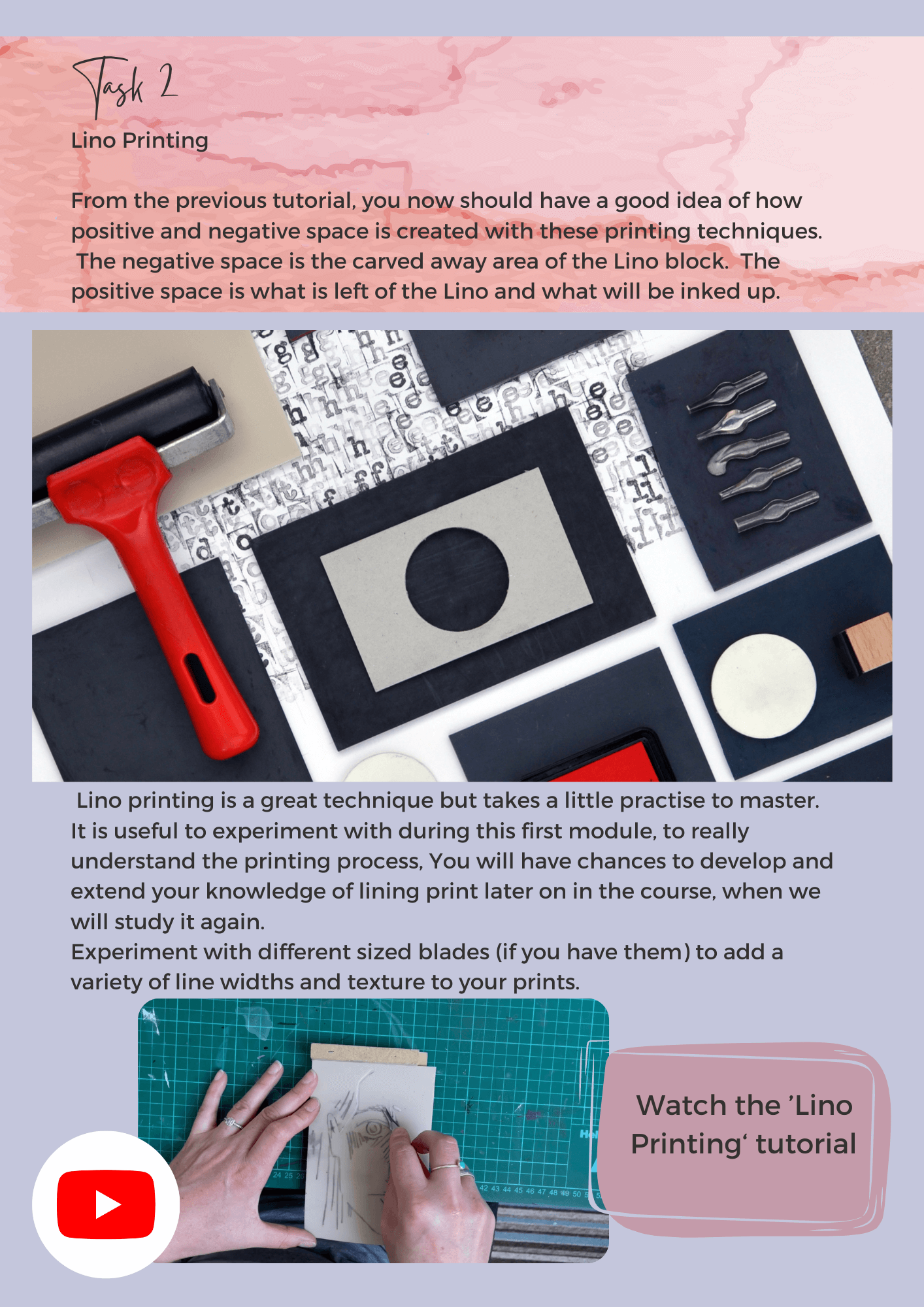
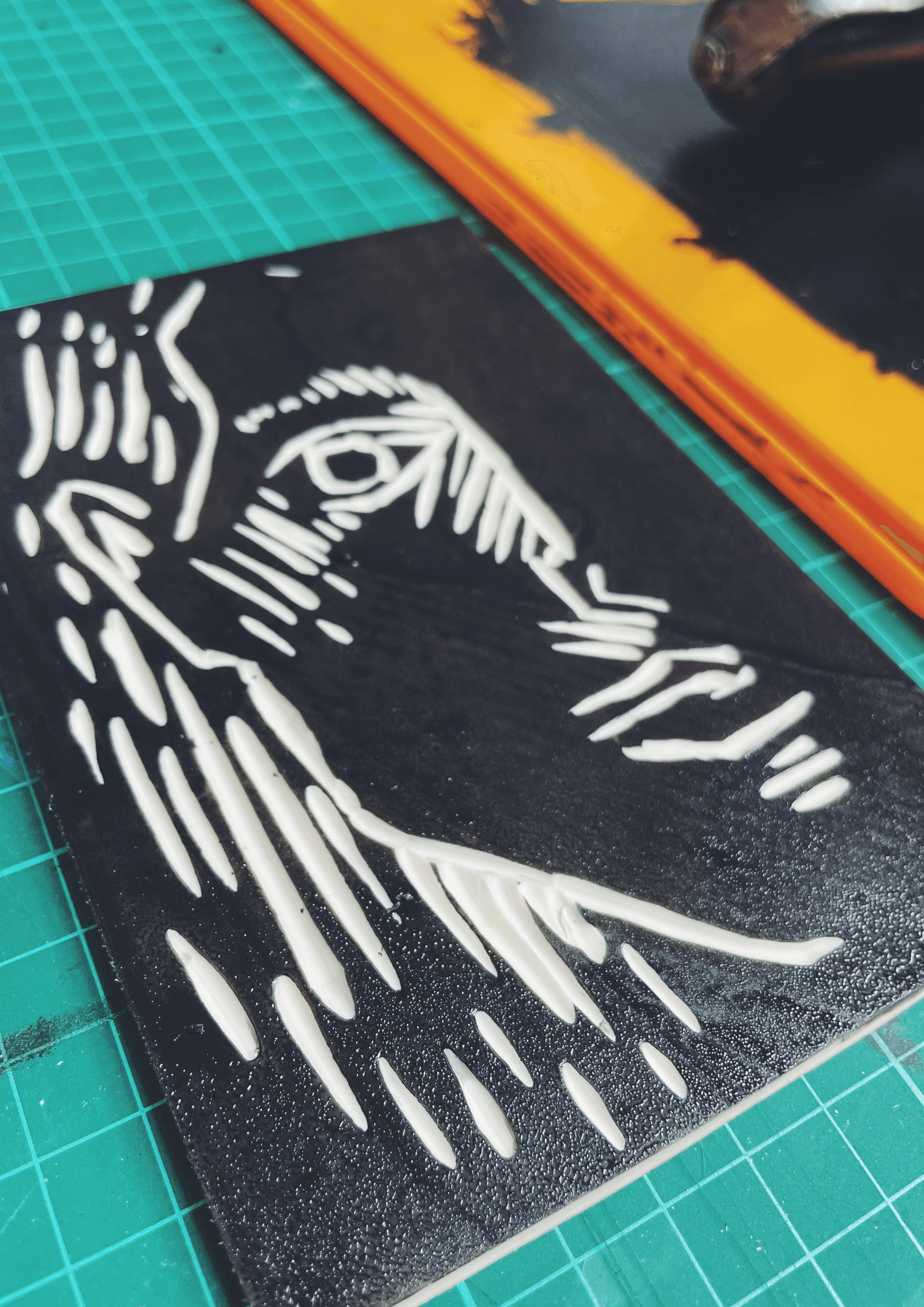
- Introduction to Printmaking: Transform observational drawings into printmaking outcomes using techniques like stencilling, Lino printing, and Gel plate printing.
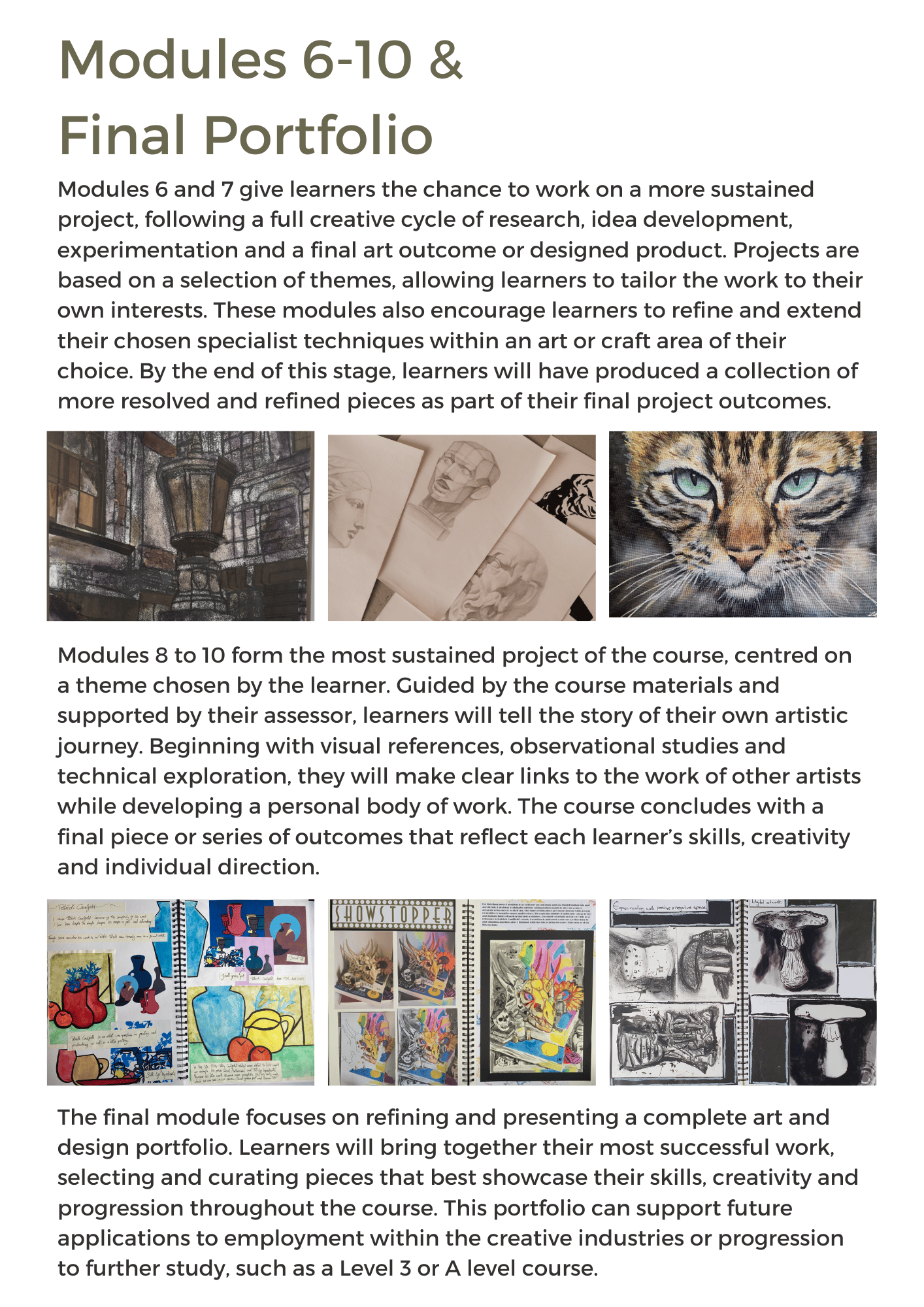
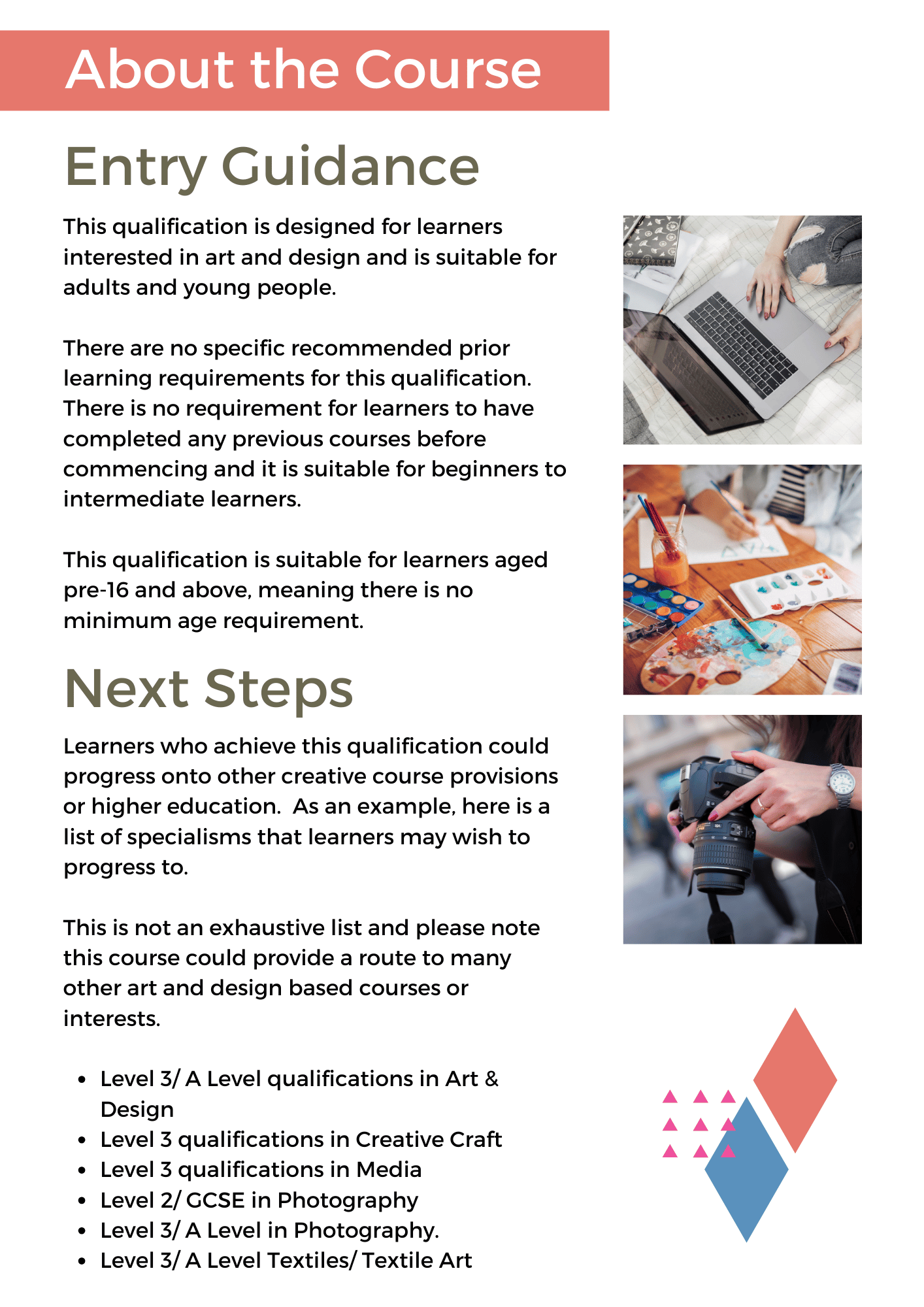
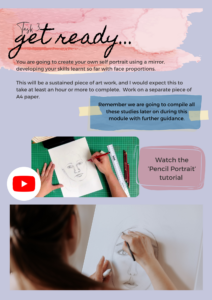
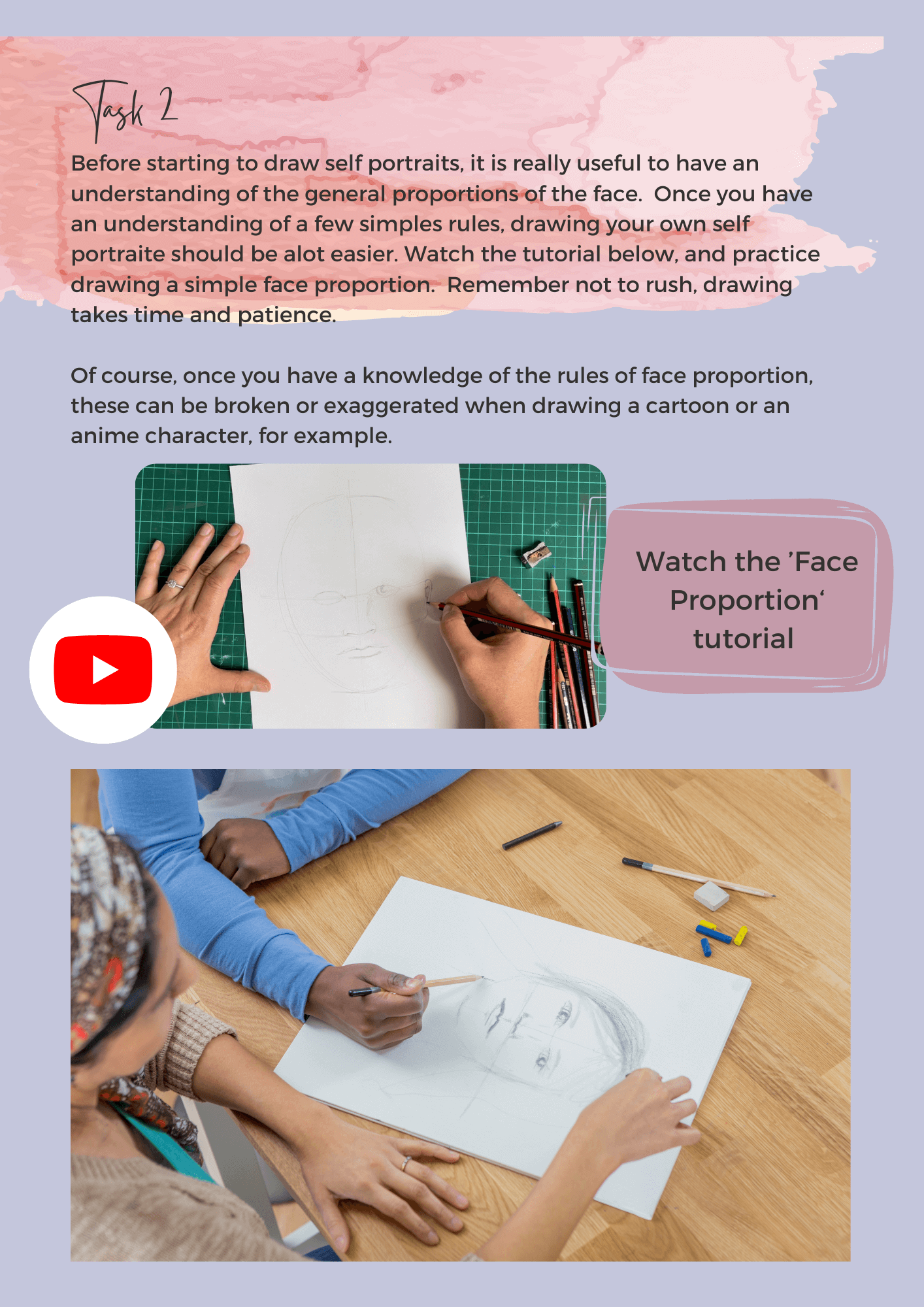
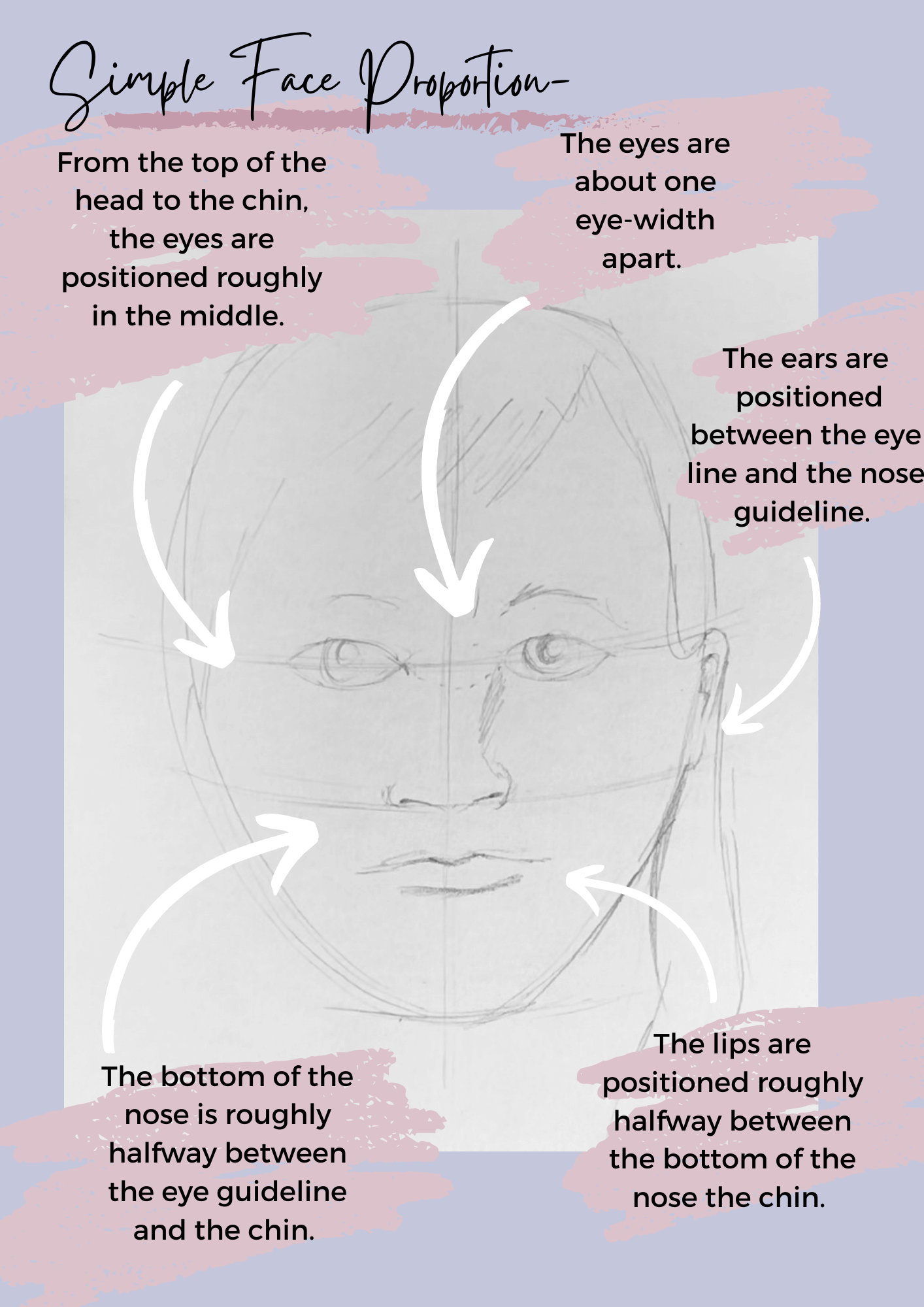
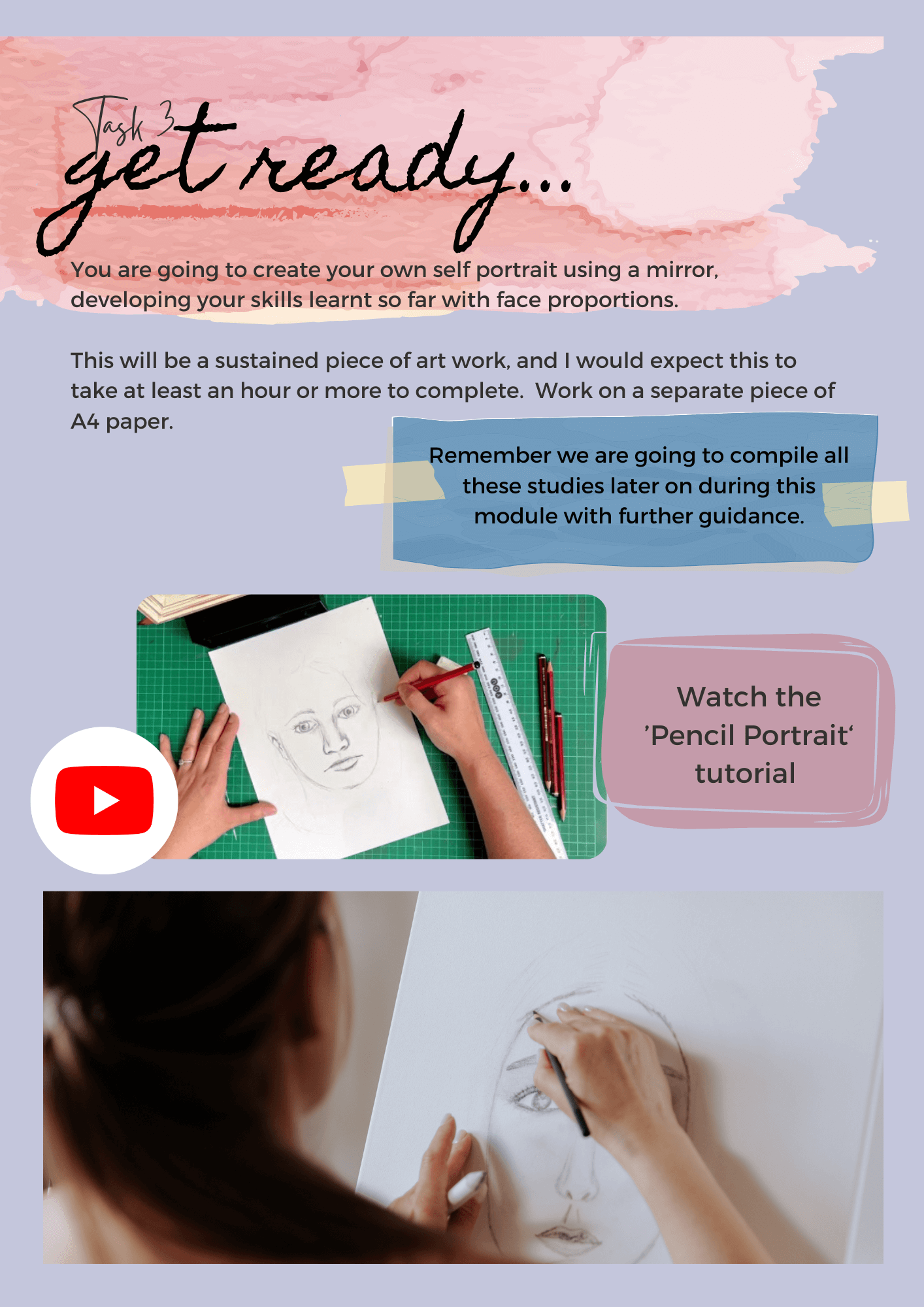
- 2D Visual Communication: Enhance your skills in drawing, painting, photography, and printmaking through themed projects, including architecture, portraiture and still life.
- Sustained Project Development: Work on extensive projects that involve a cycle of research, design ideas, and development, culminating in final art outcomes.
- Artistic Journey Narration: Create a sustained project based on personal themes, showcasing your artistic journey with connections to the work of other artists.
- Portfolio Building: Build a comprehensive art and design portfolio that highlights your skills and artistic evolution.
- Preparation for Future Opportunities: Refine your portfolio to support applications for employment in the creative industry or further study, such as Level 3 or A Level courses.
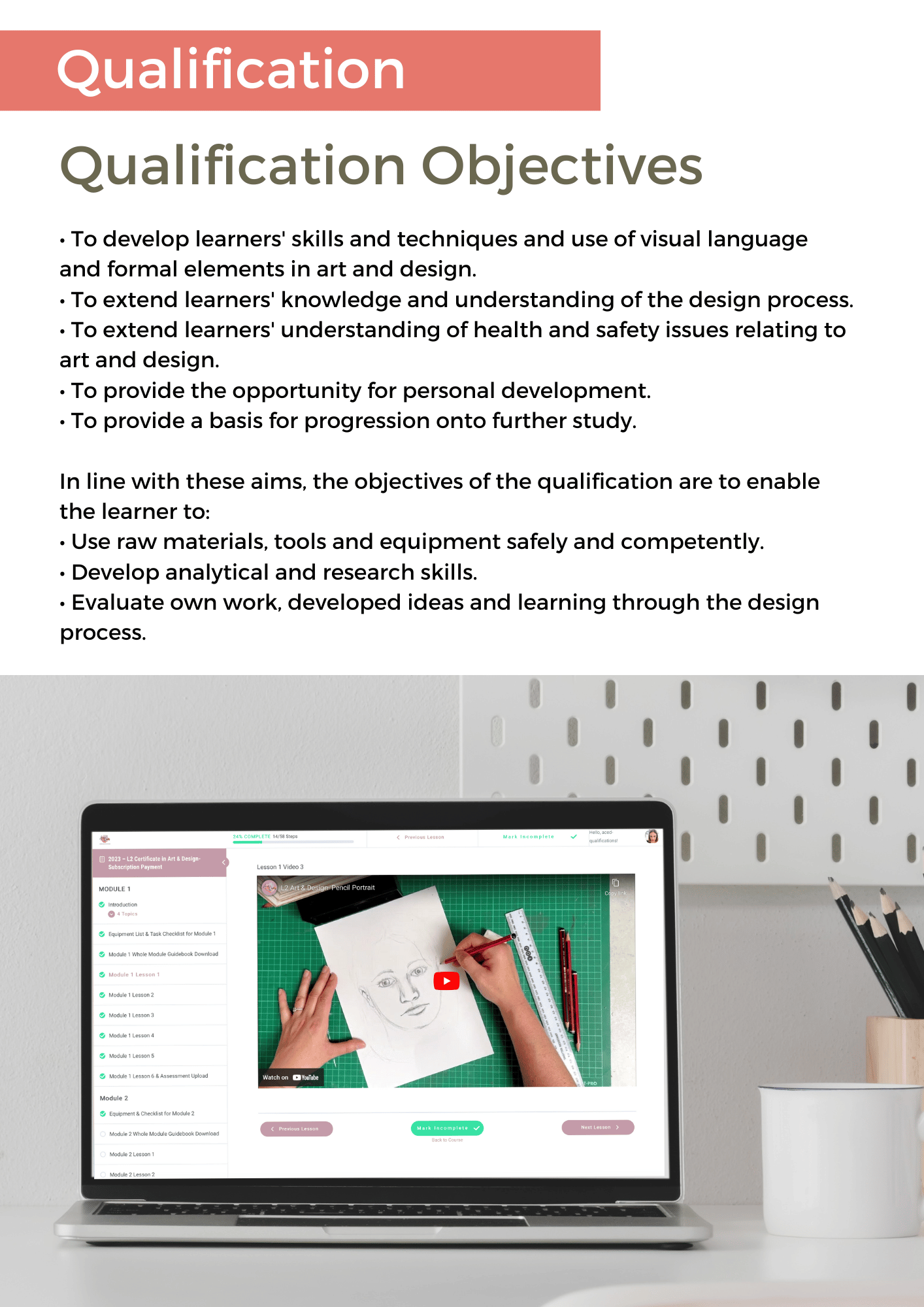
Objectives of this qualification:
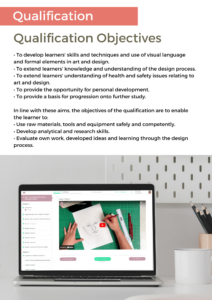
- Develop learners’ skills and techniques and use of visual language and formal elements in art and design.
- Extend learners’ knowledge and understanding of the design process.
- Extend learners’ understanding of health and safety issues relating to art and design.
- Provide the opportunity for personal development.
- Provide a basis for progression onto further study.
What could this qualification lead to?
Learners who achieve this qualification could progress onto other creative course provisions or higher education. As an example, here is a list of specialisms that learners may wish to progress to.
This is not an exhaustive list and please note this course could provide a route to many other creative courses or interests.
- Level 3/ A Level qualifications in Art & Design
- Level 3 qualifications in Creative Craft
- Level 3 qualifications in Media
- Level 2/ GCSE in Photography
- Level 3/ A Level in Photography.
- Level 3/ A Level Textiles/ Textile Art
Additionally, the course will equip the learner will key skills to develop a portfolio of design work.
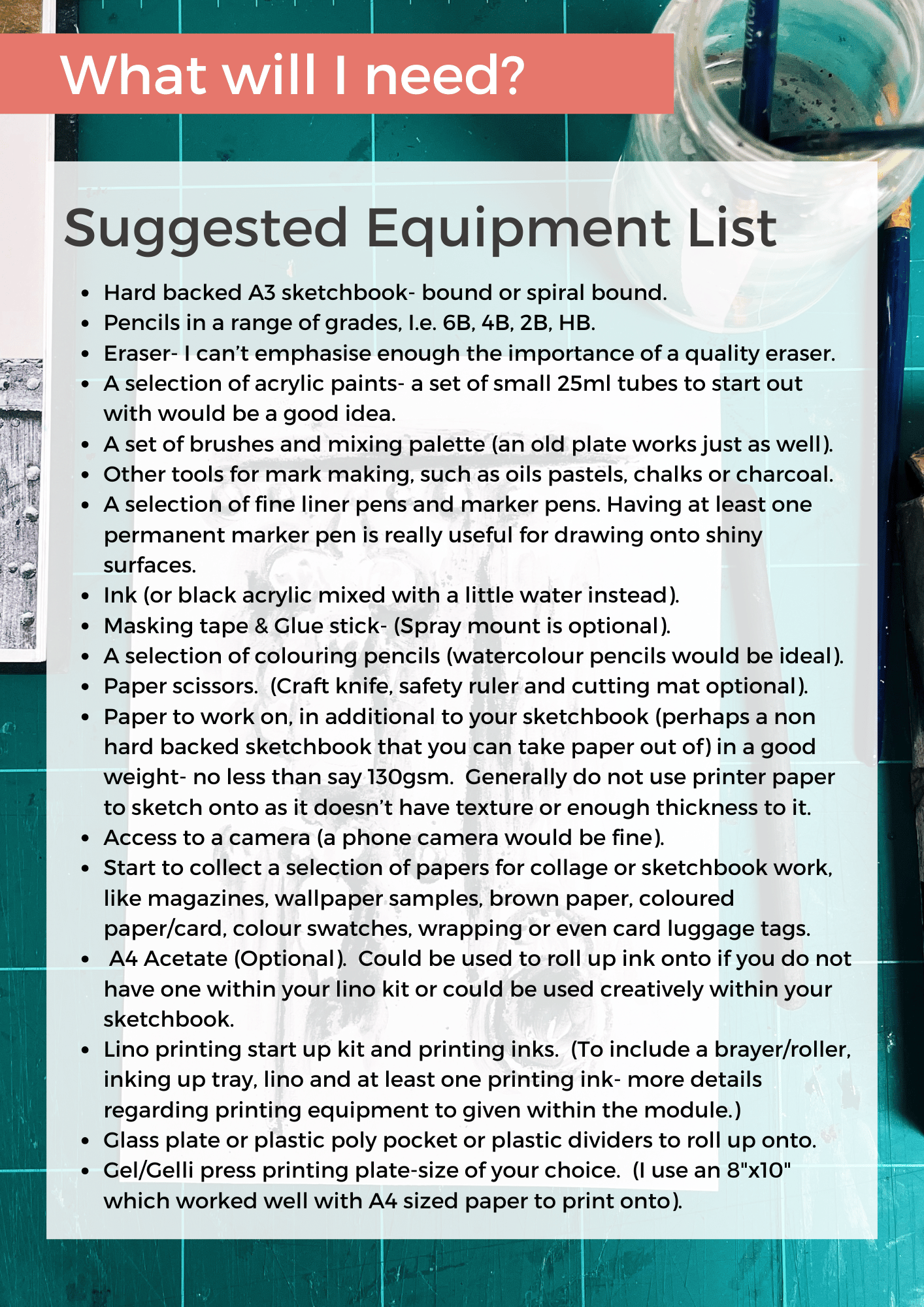
Suggested materials List
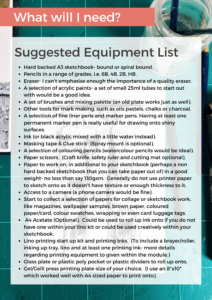
- Hard backed A3 sketchbook- bound or spiral bound.
- Pencils in a range of grades, I.e. 6B, 4B, 2B, HB.
- Eraser- I can’t emphasise enough the importance of a quality eraser.
- A selection of acrylic paints- a set of small 25ml tubes to start out with would be a good idea.
- A set of brushes and mixing palette (an old plate works well).
- Other tools for mark making, such as oils pastels, chalks or charcoal.
- A selection of fine liner pens and marker pens. Having at least a permanent marker pen is really useful for drawing onto shiny surfaces.
- Ink or black acrylic mixed with a little water to become more fluid.
- Masking tape & Glue stick- Spray mount (optional).
- A selection of colouring pencils (watercolour pencils would be ideal).
- Paper scissors and/or Craft knife, safety ruler and cutting mat (optional).
- Paper to work on, in additional to your sketchbook (perhaps a non hard backed sketchbook that you can take paper out of) in a good weight- no less than say 130gsm.
- Access to a camera (a phone camera would be fine).
- Start to collect a selection of papers for collage or sketchbook work, like magazines, wallpaper samples, brown paper, coloured paper/card, colour swatches, wrapping or even card luggage tags.
- A4 Acetate.
- Lino printing start up kit and printing inks.
- Glass plate or plastic poly pocket or plastic dividers to roll up onto.
- Gel/Gelli press printing plate-size of your choice.